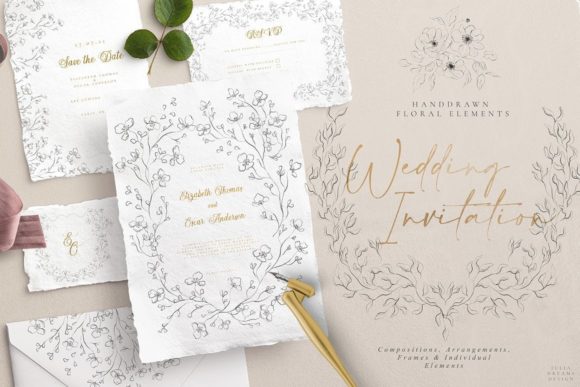
Elegant Wedding Florals: Your Complete Hand-Drawn Graphics Suite
There's a moment in every wedding planning journey when the details start to matter more than the big picture. The save-the-date cards need to feel cohesive with the table numbers, which should echo the style of the thank-you notes you haven't even designed yet. If you've ever found yourself scrolling through endless stock sites trying to find floral elements that actually work together, you know the frustration. That's exactly the problem this collection solves—and it does so with an elegance that feels genuinely personal.
Why Hand-Drawn Botanical Illustrations Change Everything
Digital design has given us incredible tools, but there's something irreplaceable about artwork that started as a pencil sketch on paper. Each flower, leaf, and frame in this collection was originally created with a thin pencil line, then refined and digitized while preserving that organic, hand-painted quality. The result is a set of graphics that feel warm and intentional rather than sterile and mass-produced.
Think about the last wedding invitation that made you pause. Chances are, it wasn't the font or the color palette alone—it was the feeling the entire piece created. Delicate botanical illustrations carry an inherent romanticism that synthetic clip art simply cannot replicate. The subtle imperfections in hand-drawn lines add character, making each design element feel like it was crafted specifically for your project.
This particular collection covers six distinct botanical themes, each with its own personality. Anemones bring dramatic elegance with their bold centers and sweeping petals. Cherry blossoms offer that fleeting, romantic springtime quality perfect for March and April celebrations. Peonies deliver lush fullness and a sense of abundance that works beautifully for summer weddings. Meanwhile, rosemary carries symbolic meaning—traditionally associated with love and fidelity—making it a thoughtful choice for couples who appreciate botanical significance.
What's Inside and How to Actually Use It
Let's talk specifics, because a beautiful collection is only useful if it's organized well. Each botanical set includes three types of assets: individual elements for building custom arrangements, pre-made frames for quick implementation, and ready compositions that work as-is for smaller projects.
The Anemone set gives you 10 individual elements plus 6 frames and 6 compositions. That's enough variety to design an entire wedding suite without repeating the same arrangement twice. The Peony collection includes 8 elements, 6 frames, and 2 compositions—ideal for creating that lush, garden-inspired aesthetic many couples gravitate toward.
For those working on destination weddings or tropical-themed events, the Monstera set with 7 elements, 5 frames, and 2 compositions offers bold, architectural leaves that pair surprisingly well with softer florals. And if your client wants something seasonal, the Spring Leaves and Autumn Leaves sets let you shift the mood entirely—from fresh green vitality to warm, earthy richness.
Every single file comes as a PNG with transparent background, which means you're not spending hours removing white edges or dealing with awkward backgrounds clashing with your design. Drop them onto any surface—dark cardstock, textured paper backgrounds, digital mockups—and they integrate seamlessly.
Beyond the Wedding Day: Building a Brand with Botanicals
Here's where this collection becomes genuinely versatile. Wedding invitations are the obvious starting point, but consider the broader applications for anyone running a small business or creative practice.
If you own a boutique, a florist shop, a bakery, or a wellness studio, consistent botanical graphics become the visual thread connecting everything you produce. Use the cherry blossom compositions for your spring product packaging. Apply the rosemary frames to your business cards. Incorporate individual monstera leaves into your social media templates. Suddenly, your entire brand presence feels unified without hiring a custom illustrator.
For packaging design, these elements shine. Imagine a small candle company using peony arrangements on their box sleeves, or a tea brand incorporating spring leaves into their label design. The hand-drawn quality communicates artisanal craftsmanship—exactly the message small businesses want to send.
Social media content benefits enormously from having a library of cohesive graphics. Instead of creating every Instagram post from scratch, you can build a template system using the individual elements and compositions. Your feed maintains visual consistency while still offering enough variety to keep followers engaged. The frames work particularly well for quote graphics, announcement posts, and story templates.
Website and blog design is another natural fit. Decorative dividers made from individual botanical elements, header images built from compositions, sidebar accents using single leaves—these details elevate a basic website into something that feels curated and intentional. For wedding photographers, planners, and venue owners, having access to these kinds of decorative assets means your online presence can match the aesthetic you promise your clients.
Practical Tips for Working with Botanical Graphics
Having beautiful assets is one thing. Using them effectively is another. Here are some honest recommendations based on how these kinds of graphics perform in real projects.
Start with compositions when you're on a deadline. If a client needs a save-the-date proof by tomorrow, don't spend three hours arranging individual elements. Grab a pre-made composition, add your text, and deliver something polished. You can always refine later.
Layer individual elements for depth. When you have more time, building custom arrangements from individual flowers and leaves creates a more sophisticated result. Place some elements at full opacity and others at 40-50% to create a sense of depth. Rotate and scale freely—the hand-drawn style is forgiving in ways that geometric graphics are not.
Consider your color palette carefully. These graphics arrive in a natural, muted tone that works beautifully as-is for elegant, understated designs. But don't hesitate to adjust colors to match your project's palette. A cherry blossom rendered in dusty rose reads differently than one in vibrant coral—both are valid choices depending on the overall mood you're creating.
Don't overcrowd your layouts. This is the most common mistake with floral design assets. The temptation to use every beautiful element at once is real, but restraint produces more impactful work. One well-placed frame with thoughtful typography often outperforms a design crammed with botanicals competing for attention.
Think about scale and context. A delicate anemone that looks stunning on a 5x7 invitation might disappear on a large-format poster. Conversely, a bold monstera leaf that anchors a social media graphic might overwhelm a business card. Match the visual weight of your chosen elements to the physical or digital space they'll occupy.
Creating Cohesion Across Multiple Touchpoints
The real power of a comprehensive collection like this becomes apparent when you're designing across multiple formats. A couple planning their wedding might need save-the-dates, formal invitations, RSVP cards, menu cards, table numbers, programs, favor tags, and thank-you notes. Each piece needs to feel connected without being identical.
Using the same botanical family across all pieces—say, peonies for the main invitation and individual peony elements scattered through the supporting pieces—creates that elusive sense of cohesion designers strive for. The frames can unify the formal pieces while the compositions work for less structured items like favor tags or photo booth props.
For small business owners thinking about long-term brand development, consider rotating your botanical elements seasonally. Spring leaves and cherry blossoms for your Q1 campaigns. Monstera and anemones for summer promotions. Autumn leaves for fall collections. Rosemary for winter and holiday content. This approach keeps your visual content fresh while maintaining the botanical through-line that makes your brand recognizable.
Every element in this collection was designed to work both independently and as part of a larger visual system. That flexibility is what separates genuinely useful design assets from decorative novelties. Whether you're a wedding planner building a comprehensive stationery suite, a small business owner developing your brand identity, or a designer working across multiple client projects, having a library of cohesive, hand-drawn botanical graphics at your fingertips fundamentally changes what you can create—and how quickly you can create it.